MVP Development for Founders in Germany
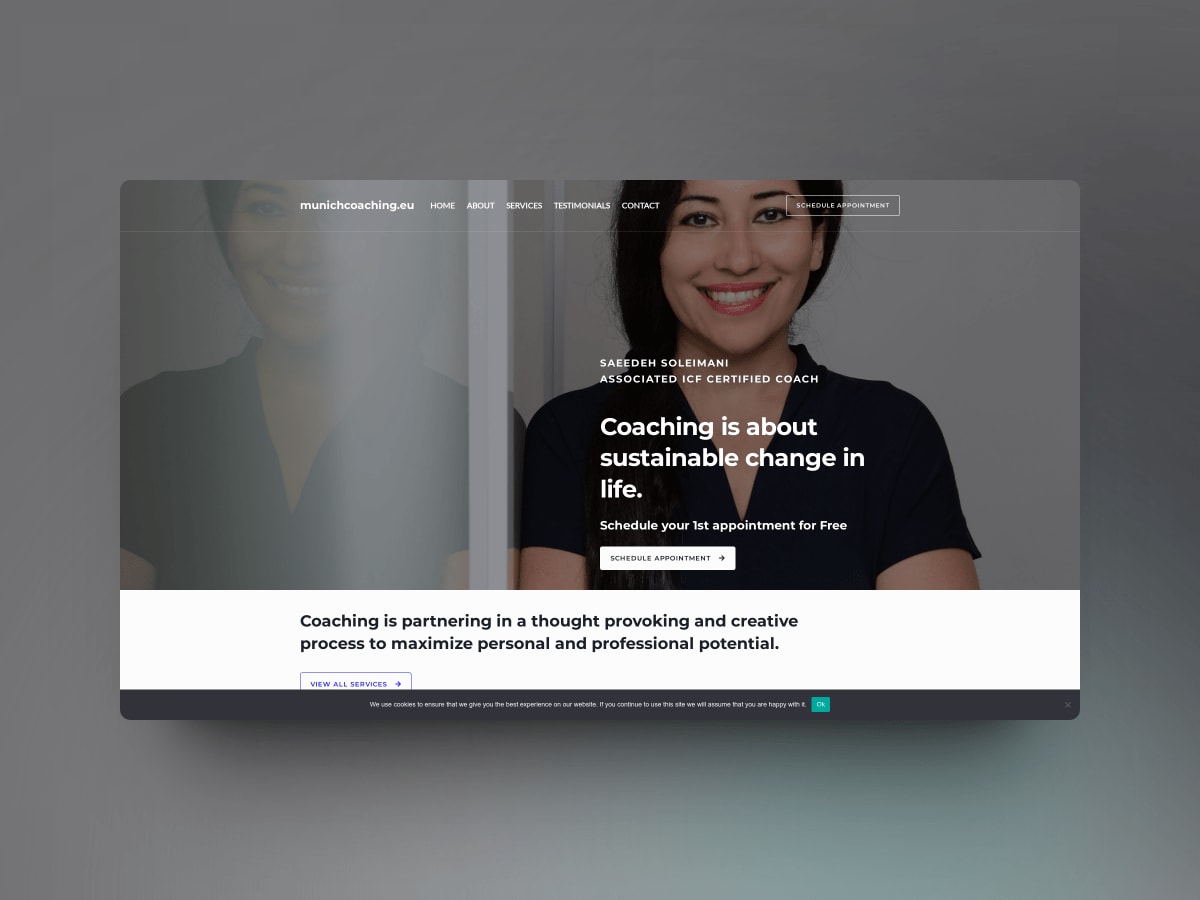
A founder in Germany can expect a local agency to quote €30,000 to €80,000 for a SaaS MVP, and a senior freelancer considerably less, with the build taking ten weeks or more. Easify, a team based in Budapest, typically builds MVPs for €5,000 to €25,000 over four to twelve weeks, working in English on Central European Time. We have no office in Germany; we work with German clients remotely, and one of them, Munich Coaching, is a published case study.
This page covers what is specific to building from Germany: local price levels with a worked breakdown, what the first release should prove, the Impressum and other compliance items that belong in the scope, VAT on an invoice from outside the EU, the contract points to settle, and how a remote team in Budapest fits in. For general price mechanics, read how much an MVP costs in Europe.
At a glance
| Question | Answer |
|---|---|
| German agency price level | €30,000 to €80,000 for an agency-built SaaS MVP in Berlin, 10 to 16 weeks, day rates €600 to €800 (Kolonell) |
| German freelance rate | Median about €90 an hour for freelance software developers (freelancermap) |
| Easify | €5,000 to €25,000, 4 to 12 weeks, €25 to €45 an hour, €1,000 minimum |
| First step | MVP Scoping Sprint: €900, about two weeks, credited in full against the build if you build with us |
| Time zone | Same as Germany: CET/CEST |
| Language | English or Hungarian, not German |
| Funding to know | EXIST-Gründungsstipendium and High-Tech Gründerfonds; see our German funding guide |
| Must be in scope | Impressum (§ 5 DDG), privacy notice, cookie consent if you use non-essential cookies |
| Invoices | In euros, issued by Easify's registered entity in India |
| VAT | Supplier outside the EU: you usually account for German VAT under § 13b UStG |
| Hosting | Hosted in the EU |
| Office in Germany | None. Remote, with a German client on record |
What German teams charge, and what that buys
Two published reference points, both for Germany:
- Agencies. Kolonell puts an agency-built SaaS MVP in Berlin at €30,000 to €80,000 for 10 to 16 weeks of work, at day rates of €600 to €800. The same article puts a senior full-stack freelancer at €20,000 to €45,000 over 12 to 20 weeks.
- Freelancers. freelancermap's profile data, as of September 2026, puts the median freelance software developer in Germany at about €90 an hour net, with about half between €80 and €100. These are the rates freelancers ask on their profiles, not what they finally bill.
Easify's rate is €25 to €45 an hour. The difference is structural, not an introductory price: the people you talk to are in Budapest and the engineering team is in India. We would rather you knew that before the first call than worked it out later.
A worked breakdown
The same Kolonell article breaks a Berlin SaaS MVP into building blocks, priced at an agency day rate of €700:
| Building block | Work days | At €700 a day |
|---|---|---|
| Product framing and mockups | 8 to 12 | €5,600 to €8,400 |
| Authentication and accounts | 4 to 6 | €2,800 to €4,200 |
| Core feature | 20 to 45 | €14,000 to €31,500 |
| Stripe billing | 4 to 8 | €2,800 to €5,600 |
| Dashboard and analytics | 4 to 8 | €2,800 to €5,600 |
| Testing, security, deployment | 5 to 10 | €3,500 to €7,000 |
| Total | 45 to 89 | €31,500 to €62,300 |
Three things to take from it:
- The core feature is most of the money. Accounts, billing and deployment are roughly fixed costs; the feature that makes your product different is where scope decisions pay off.
- Rate times days is only half the comparison. If the same 45 to 89 days were billed at our rate, eight hours a day, the arithmetic gives about €9,000 to €32,000. That is arithmetic, not a quote: we price from our own written scope, and a smaller version one moves the number more than any rate does.
- The table leaves out what happens after launch. Hosting and third-party services are not part of a build price, with us or with anyone else. The scope should say what the product costs to keep running.
A lower rate is only cheaper if the scope is the same. When you compare our quote with a German one, line up what each includes: design, testing, deployment, who owns the code, and what is explicitly left out. Our 12 questions for choosing an MVP agency are written for exactly that comparison, and the MVP cost calculator shows how the hours add up.
What the first release has to prove
The budget follows from the question. Decide which milestone the MVP is for before you ask anyone for a price:
| Your next milestone | What version one has to show | What can wait |
|---|---|---|
| First paying customers | Sign-up, the core feature, a working payment | Admin panels, settings, reporting |
| A pilot with a German company | The core workflow on the pilot's real data, access for their team | Self-service onboarding, billing |
| A seed round or HTGF conversation | Real usage, even from a small group, and what it taught you | Polish, scale, secondary features |
| A research-based idea (EXIST stage) | That the technical core works for a real user | Payments, growth features |
MVP, prototype or proof of concept? A proof of concept tests whether something can be built. A prototype tests whether people understand it, usually with no real data or payments. An MVP is working software real users can sign up to and pay for, so it tests whether they want it. If you are not yet sure which you need, how long an MVP takes walks through the difference in time and cost.
Funding: the short version
Two programmes come up most often with German founders. The EXIST-Gründungsstipendium mainly pays founders' living costs for 12 months, for founding ideas from universities and research institutions, with a material-cost budget of up to €10,000 for a solo founder or €30,000 for a team (programme page). The High-Tech Gründerfonds is a venture investor, not a grant, whose initial investments have a sweet spot of €800,000 and up.
Neither is a build budget by default. If you hope to spend EXIST material costs on an external team, ask your university's Gründungsnetzwerk whether that is eligible before you sign anything. Our guide to startup grants in Germany for an MVP covers these and the other programmes, with what each pays for. We do not write funding applications; the scope and fixed price from the Scoping Sprint are the kind of document an application or an investor usually asks to see.
Compliance items that belong in a German MVP's scope
These are cheap to build at the start and awkward to retrofit after launch.
- Impressum. Section 5 of the Digitale-Dienste-Gesetz requires providers of commercial digital services to keep certain information easy to recognise, directly reachable and permanently available: your name and address, for a company its legal form and authorised representatives, a way to contact you quickly including an email address, your commercial register and number, and your VAT ID if you have one. Regulated professions and licensed activities have further items. We build the page and the footer link; the content is yours to supply, and a lawyer should check it if you are unsure.
- Privacy notice and consent. Under the GDPR you need a privacy notice that names every service the MVP sends personal data to: hosting, email, analytics, payments, error tracking. A short list of third-party services is easier to document, which is one more reason to keep version one small. If you use non-essential cookies or tracking, the consent banner belongs in the first release.
- German-language copy. German users and German legal texts usually mean a German interface. We work in English or Hungarian, so the German copy comes from you or a translator, and we build the product so that adding a language later is not a rewrite.
- Terms for paid products. If the MVP takes money from consumers, you will need terms, a cancellation policy and correct price display. Those texts come from you or a lawyer; we build the flows that show them at the right moment.
VAT, invoices and e-invoicing
Who invoices you. Our invoices are in euros and are issued by Easify's registered entity in India. For VAT purposes that makes us a supplier established outside the EU, even though the people you talk to are in Budapest.
The reverse charge. The EU's Your Europe guidance on buying services from outside the EU says a business receiving services from a supplier based outside the EU should usually pay VAT at its own country's rate, as if it had supplied the service itself, and can usually deduct it later in its VAT return. In German law this is § 13b UStG: for services of a business established abroad (Abs. 2 Nr. 1), the recipient owes the tax if it is a business or a legal person (Abs. 5).
What that means in practice:
- The invoice arrives without German VAT. That is correct, not a mistake to send back.
- You declare the VAT. Under § 13b Abs. 2 the tax arises when the invoice is issued, and at the latest at the end of the month after the service was performed, so it goes in that period's Umsatzsteuer-Voranmeldung.
- You normally deduct it again. On a €10,000 invoice you would declare €1,900 at Germany's 19% standard rate and, if you are entitled to deduct input tax, deduct the same €1,900. Net cost: zero.
- Kleinunternehmer still owe it. § 13b Abs. 5 says the rule applies even where the customer uses the small-business exemption in § 19. A Kleinunternehmer generally cannot deduct input tax, so for them the €1,900 is a real cost. Raise it with your Steuerberater before you sign.
- Buying before the company exists is different. § 13b Abs. 5 covers businesses and legal persons. If you would sign as a private person before founding, ask your adviser first, and tell us who the contracting party will be.
E-Rechnung. Since 1 January 2025 German businesses must be able to receive structured e-invoices, and an email inbox is enough to meet that. The obligation applies to supplies between businesses established in Germany, with transition periods for issuing until the end of 2026, or 2027 for smaller issuers. An invoice from a supplier outside Germany is generally not inside that domestic rule, but if your accountant's software expects a particular format, tell us at the start.
This is orientation, not tax advice. The Your Europe page itself warns that there are several important exceptions to the general rules, and your Steuerberater should confirm the treatment for your contract.
Contract points to settle before the build
Whoever you hire, these belong in writing before the first line of code:
| Point | Why it matters | With us |
|---|---|---|
| Scope and exclusions | Most disputes are about what was "obviously" included | Written in the Scoping Sprint, including what is left out and why |
| Price and changes | A fixed price is only fixed for a fixed scope | Fixed after the written scope; a new idea is a visible change to it, and a new direction is a new scope |
| Ownership | You need the right to keep, change and sell the product | Code, accounts, design files and documentation are yours on final payment |
| Accounts | Hosting, app stores and payments should not sit in a supplier's name | Opened in your company's name |
| Running costs | Hosting and third-party services are billed monthly, after launch | Not in the build price; the scope states what it costs to run |
| Personal data | A supplier that processes personal data for you needs a processing contract under Article 28 GDPR | Raise it during scoping, with who needs production access |
| Contracting party | Decides the VAT treatment above | Easify's registered entity in India, invoicing in euros |
Working with a Budapest team from Germany
- Same time zone. Budapest and Germany both run on CET and change the clocks on the same dates. A question in the morning gets an answer the same working day.
- English throughout. Calls, written scope, tickets and documentation are in English.
- Remote by default. There is no office in Germany and no one on site. If your project needs a developer in the room every week, hire locally.
- Where the work happens. The people you talk to are in Budapest; engineering is in India.
- The stack. Next.js, React and TypeScript, with Laravel and PostgreSQL behind them and Stripe for payments, deployed to EU regions.
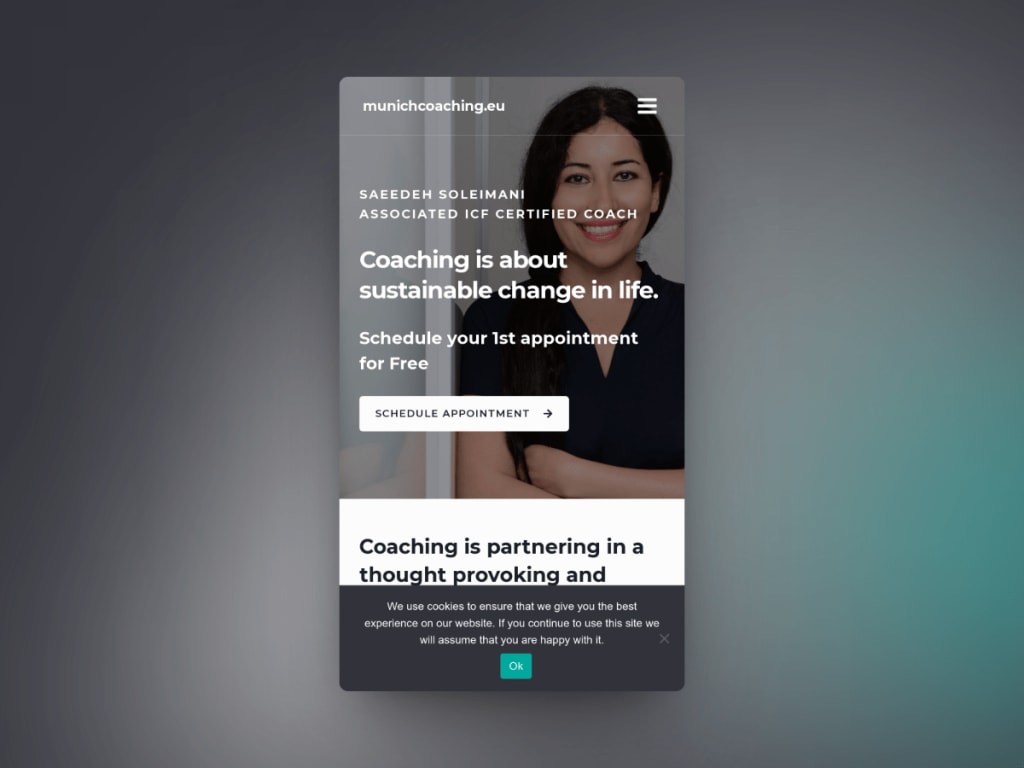
- A German client on record. We built the website, booking flow and CRM for Munich Coaching, a coaching practice in Munich. That was a website project rather than an MVP; for MVPs, see the Nonstop Nanny booking platform in Budapest.
EU hosting
We deploy client products to EU data-centre regions, so your MVP is hosted in the EU. Be precise about what that means when you write your privacy notice: hosting in the EU is not the same as personal data never leaving it. Our engineering team is in India, and India does not have an EU adequacy decision. Ask us during scoping which people need access to production data, and document it.
How an engagement runs from Germany
| Step | Time | What you get | Cost |
|---|---|---|---|
| Send a few lines | Reply within one business day | A first answer and a payment link for the Sprint | Free |
| MVP Scoping Sprint | About two weeks | Written scope, flows, hosting plan, fixed price and timeline | €900, credited in full against the build if you build with us |
| Build in visible stages | 4 to 12 weeks | Something usable at the end of each stage, with Impressum and consent built in | Typically €5,000 to €25,000 |
| Launch and hand over | At the end | Code, accounts and documentation, yours on final payment | Included |
The Sprint's written scope covers the one question the MVP must answer, the smallest feature set that answers it, what is deliberately left out, the main user flows, the technical and hosting plan, and the fixed price. It is yours to keep, including if you take it to a German agency.
Already built a prototype with Lovable, Bolt, v0 or similar? Start with the €99 Prototype Check instead: within 48 hours of payment and access, a person sends you the top security and data risks in writing, and the €99 is credited against the build.
What to send, to us or to any agency
A short brief gets a better answer than a long feature list. Copy this and fill it in:
- The question. What must the first version find out? One sentence.
- The first users. Who they are, and how you will reach the first twenty.
- What exists. Designs, a prototype, a spreadsheet the product replaces.
- Must-have integrations. Payments, calendars, an existing system.
- Languages. Which languages the interface and legal texts need.
- The deadline and its reason. A pilot, an EXIST milestone, a funding round.
- The contracting party. A GmbH or UG, one in formation, or you personally, because it changes the VAT.
Common mistakes we see in German briefs
- Comparing quotes on different scopes. A €15,000 quote and a €50,000 quote are often for different products. Give every bidder the same written scope.
- Leaving the Impressum and consent to the last week. They are small, but they touch the footer, the email templates and every page with tracking.
- Budgeting a grant before checking eligibility. EXIST material costs, in particular, may not cover an external team.
- Writing "data stays in Germany" in the privacy notice when the hosting is in another EU region or engineers elsewhere can reach production.
- Building the whole product. Admin panels, settings and tiered permissions can almost always wait for version two.
When we are not the right choice
- You need a German-speaking team. For workshops, user interviews or legal copy in German, a German agency fits better.
- You need someone on site. We are remote.
- Your EXIST or other grant conditions require a German contractor or specific procurement. Check before you talk to us.
- Your budget is under €1,000. That is our minimum; a no-code tool or an AI app builder is a better start, and our comparison of agency, freelancer and no-code helps you choose.
Founding in Vienna or Graz instead? The Austrian rules differ in the details; see MVP development in Austria.
From Budapest, for teams in Germany
Founding in Germany and need an MVP built without a Berlin agency budget?
We are a Budapest team that builds MVPs for founders across Europe, typically €5,000 to €25,000 over four to twelve weeks, in English and on the same time zone as you. We have no office in Germany. Send us what you want to test, who it is for and your deadline, or ask for the €900 MVP Scoping Sprint, credited in full against the build if you build with us, and we reply within one business day.


Frequently asked